
What is the Yellow Belt and What Does it Mean that Toronto has Gotten Rid of It?
Toronto, a city renowned for its vibrant neighbourhoods and diverse culture, has long been shaped by zoning laws that influence its urban development. Among these regulations, the Yellow Belt has played a significant role in defining residential areas. Recently, the city made a groundbreaking decision to eliminate the Yellow Belt, aiming to address pressing issues such as housing affordability and urban density. But what exactly was the Yellow Belt, and what does its removal mean for Toronto?
What is the Yellow Belt?
The Yellow Belt refers to a vast expanse of land in Toronto, predominantly designated for low-density, single-family homes. This zoning designation, marked by its yellow color on zoning maps (see below), was established to preserve the character of these neighborhoods. Historically, the Yellow Belt was intended to create stable residential areas, preventing overdevelopment and maintaining the aesthetic appeal of suburban living.
The areas covered by the Yellow Belt span a significant portion of Toronto’s residential land. From Rosedale’s tree-lined streets to the eclectic vibe of The Annex, these neighborhoods have been synonymous with low-rise housing, limited to single-family homes or duplexes. While this zoning policy succeeded in maintaining the charm and exclusivity of these areas, it also led to unintended consequences in the broader housing market.
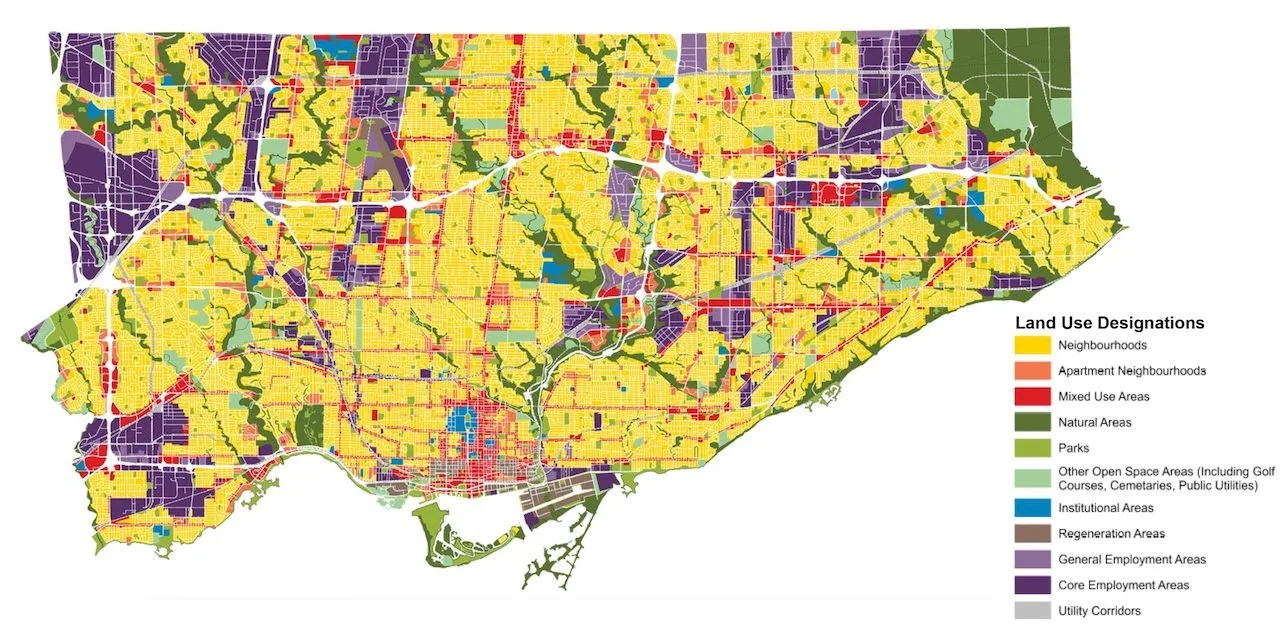
City of Toronto Zoning Map
The Impact of the Yellow Belt
The Yellow Belt profoundly influenced housing and development in Toronto. By restricting housing types to single-family homes, it significantly limited the city’s housing supply, contributing to escalating property prices and a lack of affordable housing options. As Toronto’s population grew, the demand for housing outpaced supply, exacerbating the affordability crisis.
Supporters of the Yellow Belt argued that it preserved the character of neighborhoods, provided stability, and prevented the congestion associated with higher-density living. Critics, however, contended that these restrictions hindered the city’s ability to evolve and accommodate its growing population. The Yellow Belt became a focal point in the debate over how to balance preservation with progress.
The Decision to Eliminate the Yellow Belt
In a bold move to address the housing crisis, Toronto recently decided to eliminate the Yellow Belt. This decision was driven by several key factors. First and foremost, the city’s housing affordability crisis reached a tipping point. With average home prices skyrocketing and rental vacancies dwindling, the need for a more diverse and plentiful housing supply became urgent.
Additionally, the push for higher density and more diverse housing options gained momentum. Urban planners and housing advocates emphasized the need for “missing middle” housing – types of residences that fall between single-family homes and high-rise apartments, such as townhouses and triplexes. Eliminating the Yellow Belt opened the door for these more versatile housing solutions.
Environmental and sustainability concerns also played a role in this decision. Low-density sprawl is often criticized for its environmental impact, including increased carbon emissions and inefficient land use. By allowing higher-density development, Toronto aims to create more sustainable and transit-oriented communities.
Implications of Removing the Yellow Belt
The removal of the Yellow Belt carries significant implications for Toronto’s future. On the positive side, this change is expected to increase the housing supply, providing more options for residents and potentially easing the affordability crisis. More diverse housing types will cater to different demographics, including young professionals, families, and downsizers, making the city more inclusive.
Furthermore, higher-density development can enhance the vibrancy of neighborhoods, supporting local businesses and fostering a sense of community. It can also lead to better utilization of existing infrastructure and public services, making the city more efficient and resilient.
However, this transition is not without challenges. Existing neighborhoods may face significant changes, including increased traffic and pressure on infrastructure. The adaptation of public services, such as schools and healthcare facilities, will be crucial to accommodate the growing population. Additionally, community resistance and NIMBYism (Not In My Back Yard) could pose obstacles to new developments.
Urban planners and real estate experts predict that the elimination of the Yellow Belt will lead to a gradual transformation of Toronto’s urban landscape. While the full impact will unfold over the coming years, the early signs indicate a positive shift towards a more inclusive and dynamic city.
Takeaways
The elimination of the Yellow Belt marks a significant turning point in Toronto’s urban development. By removing this restrictive zoning designation, the city aims to tackle the housing affordability crisis, promote sustainable growth, and create more diverse and vibrant communities. While challenges remain, the potential benefits for Toronto’s real estate market and its residents are substantial. As the city navigates this transition, the future of urban development in Toronto looks promising, paving the way for a more inclusive and resilient urban environment.